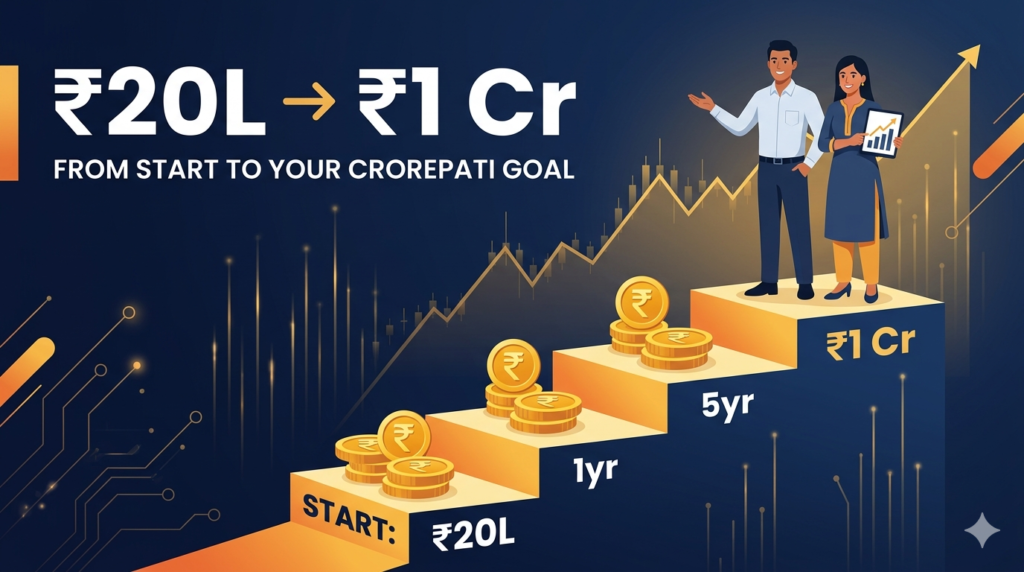
₹20 लाखांचे ₹1 कोटी कसे बनवायचे?
फक्त 9 वर्षांत! Step by Step Plan
SIP, Equity, Gold आणि Smart Asset Allocation च्या मदतीने तुमच्या Wealth Creation प्रवासाचा संपूर्ण रोडमॅप — Real Calculations सह
प्रस्तावना – ₹20 लाख ते ₹1 कोटी: हे शक्य आहे का?
तुमच्या Bank Account मध्ये ₹20 लाख आहेत. छान! पण आता पुढे काय? हे पैसे FD मध्ये ठेवायचे का? Gold विकत घ्यायचा का? की कुठेतरी Property घ्यायची? बरेचजण या प्रश्नाने गोंधळात पडतात आणि शेवटी काहीच निर्णय न घेता पैसे Savings Account मध्ये सडत ठेवतात.
सत्य हे आहे की ₹20 लाख ते ₹1 कोटी हा प्रवास अवघड नाही — फक्त योग्य strategy, patience आणि discipline हवे. 2026 मध्ये India चे Equity Market, Mutual Fund Industry आणि Digital Investment Platforms इतके प्रगत झाले आहेत की एक सामान्य माणूसही Wealth Creation करू शकतो.
AMFI (Association of Mutual Funds in India) च्या data नुसार, India च्या Mutual Fund Industry ची AUM (Assets Under Management) ₹60 लाख कोटींपेक्षा जास्त झाली आहे. करोडो भारतीय आज SIP आणि Mutual Funds च्या मदतीने Wealth Create करत आहेत — तुम्ही का नाही?
₹20 लाखांचे ₹1 कोटी बनवणे म्हणजे 5 पट वाढ. Compound Interest च्या Magic मुळे हे 10% Annual Return वर साधारण 17 वर्षांत, 12% वर 14 वर्षांत आणि 15% वर फक्त 11 वर्षांत शक्य आहे. जर तुम्ही Lump Sum सोबत Additional Monthly SIP पण चालू ठेवली, तर वेळ आणखी कमी होतो — काही scenarios मध्ये केवळ 8–9 वर्षे.
या article मध्ये आपण step-by-step बघणार आहोत की एक practical investment plan कसा बनवायचा, कुठे गुंतवायचे, किती वेळ लागेल, आणि कोणत्या चुका टाळायच्या. चला सुरू करूया!
Step 1: Financial Goal Clarity – स्पष्ट ध्येय ठरवा
तुमचे “Why” आणि “When” आधी ठरवा
Investment सुरू करण्यापूर्वी सर्वात महत्त्वाचा प्रश्न म्हणजे: “मला ₹1 कोटी का हवे आणि कधी हवे?” हा प्रश्न Silly वाटतो, पण याचे उत्तर तुमची पूर्ण Investment Strategy ठरवते.
- Retirement Corpus: 25–30 वर्षांनी हवे असल्यास Balanced approach चालेल — Low-to-moderate risk.
- मुलांचे Education / Marriage: 12–15 वर्षांचे horizon असल्यास Equity-heavy allocation द्या.
- Business Capital: 7–10 वर्षांत हवे असल्यास High-growth, calculated risk घ्या.
- Financial Freedom (FIRE): 10–12 वर्षांत आर्थिक स्वातंत्र्य हवे असल्यास Aggressive SIP + Lump Sum combination ठेवा.
एक कागद घ्या आणि लिहा: “माझ्याकडे ₹20 लाख आहेत. मला ₹1 कोटी _____ वर्षांत हवे आहेत कारण _____.” हे तुमचे Investment North Star असेल — प्रत्येक निर्णय याच्या आधारे घ्या.
Emergency Fund आधी बाजूला काढा
₹20 लाखांपैकी 3–6 महिन्यांचा खर्च (साधारण ₹2–4 लाख) Liquid Fund किंवा High-Interest Savings Account मध्ये ठेवा. हे Emergency Fund आहे — Investment नाही. याला कधीही Touch करू नका.
उर्वरित ₹16–18 लाख हे तुमचे actual investment corpus आहे.
Investment सुरू करण्यापूर्वी कोणतेही High-Interest Debt (Personal Loan, Credit Card) आधी फेडा. 24% interest वर Credit Card Debt असताना 12% return देणाऱ्या Mutual Fund मध्ये गुंतवणे तोट्याचे आहे.
Step 2: Asset Allocation – पैसे कुठे गुंतवायचे?
Smart Asset Allocation Formula
Asset Allocation म्हणजे तुमचे पैसे वेगवेगळ्या Asset Classes मध्ये विभागणे. हे Risk Management चे सर्वात शक्तिशाली Tool आहे. तुमचे वय आणि Risk Appetite नुसार allocation बदलते:
| वय / Profile | Equity | Debt | Gold | Cash / Liquid |
|---|---|---|---|---|
| 25–35 वर्षे (Aggressive) | 70–80% | 10–15% | 5–10% | 5% |
| 35–45 वर्षे (Moderate) | 55–65% | 20–25% | 10% | 5–10% |
| 45–55 वर्षे (Conservative) | 40–50% | 35–40% | 10–15% | 5–10% |
| 55+ वर्षे (Very Conservative) | 20–30% | 50–60% | 10% | 10–15% |
₹20 लाखांसाठी Practical Allocation (35 वर्षीय साठी उदाहरण)
| Asset Class | % | रक्कम (₹) | कुठे गुंतवायचे |
|---|---|---|---|
| Large Cap Equity MF | 30% | ₹6,00,000 | Nifty 50 Index Fund |
| Mid & Small Cap MF | 20% | ₹4,00,000 | Flexi Cap / Mid Cap Fund |
| Debt Fund | 20% | ₹4,00,000 | Short Duration / Corporate Bond |
| Gold | 10% | ₹2,00,000 | Sovereign Gold Bond / Gold ETF |
| International / REITs | 10% | ₹2,00,000 | US Index Fund / REIT Fund |
| Emergency Liquid Fund | 10% | ₹2,00,000 | Liquid MF / Savings Account |
वर्षातून एकदा तुमचे Portfolio बघा आणि original allocation वर परत आणा. SEBI नुसार, regular rebalancing हे top wealth-creation habits पैकी एक आहे. Equity खूप वाढल्यास Debt / Gold मध्ये shift करा आणि उलट.
Step 3: SIP Strategy – Real Numbers सह
Lump Sum + SIP = Power Combination
₹20 लाख एकाच वेळी गुंतवणे हे Lump Sum Investment आहे. यासोबत दर महिना SIP (Systematic Investment Plan) पण चालू केल्यास Wealth Creation चा वेग दुप्पट होतो. SIP मुळे Rupee Cost Averaging होते — Market वर किंवा खाली असताना दोन्ही वेळी फायदा मिळतो.
Monthly SIP चा Impact (12% Annual Return नुसार)
| Monthly SIP | 10 वर्षांत | 15 वर्षांत | 20 वर्षांत |
|---|---|---|---|
| ₹5,000/महिना | ₹11.6 लाख | ₹25.2 लाख | ₹49.9 लाख |
| ₹10,000/महिना | ₹23.2 लाख | ₹50.5 लाख | ₹99.9 लाख |
| ₹15,000/महिना | ₹34.8 लाख | ₹75.7 लाख | ₹1.49 कोटी |
| ₹20,000/महिना | ₹46.4 लाख | ₹1.01 कोटी | ₹1.99 कोटी |
₹16 लाख Lump Sum (12% CAGR) + ₹10,000 Monthly SIP (12% CAGR) = साधारण 12 वर्षांत ₹1 कोटी पेक्षा जास्त! हे combination तुमची goal achievement जवळजवळ 2–3 वर्षांनी लवकर करू शकते.
SIP Step-Up Strategy (Annual Increase)
दरवर्षी SIP amount 10–15% ने वाढवणे म्हणजे “SIP Step-Up.” हे Income वाढीसोबत Investment पण वाढवते आणि Corpus creation dramatically accelerate होते.
| Strategy | Initial SIP | Annual Increase | 10 वर्षांत Corpus |
|---|---|---|---|
| Normal SIP | ₹10,000 | 0% | ₹23.2 लाख |
| Step-Up SIP (10%) | ₹10,000 | 10% | ₹31.6 लाख |
| Step-Up SIP (15%) | ₹10,000 | 15% | ₹37.4 लाख |
SIP कसे काम करते, कुठे करायचे आणि कोणते Fund निवडायचे यासाठी AMFI India च्या Investor Education Section ला भेट द्या. तेथे Beginner ते Advanced Level पर्यंत सर्व माहिती उपलब्ध आहे.
Step 4: Expected Returns Calculation
Compound Interest Formula
Investment Returns समजून घेण्यासाठी Compound Interest Formula माहीत असणे आवश्यक आहे:
A = Future Value (भविष्यातील मूल्य)
P = Principal = ₹20,00,000
r = Annual Return Rate (उदा. 0.12 for 12%)
n = Compounding per year (12 = monthly)
t = Time in years
₹20 लाख → विविध Returns वर किती होतील?
(Debt / Balanced)
(Large Cap MF)
(Mid / Small Cap)
| Return Rate | 5 वर्षे | 8 वर्षे | 10 वर्षे | 12 वर्षे | 15 वर्षे | 17 वर्षे |
|---|---|---|---|---|---|---|
| 8% (FD) | ₹29.4 L | ₹37.0 L | ₹43.2 L | ₹50.4 L | ₹63.4 L | ₹73.9 L |
| 10% | ₹32.2 L | ₹42.9 L | ₹51.9 L | ₹62.7 L | ₹83.5 L | ₹1.01 Cr |
| 12% | ₹35.2 L | ₹49.5 L | ₹62.1 L | ₹77.9 L | ₹1.09 Cr | ₹1.37 Cr |
| 15% | ₹40.2 L | ₹59.9 L | ₹80.9 L | ₹1.09 Cr | ₹1.63 Cr | ₹2.12 Cr |
Inflation हे Silent Thief आहे. आज ₹1 कोटीची जी Purchasing Power आहे, ती 15 वर्षांनंतर 6% inflation नुसार फक्त ₹41 लाखांसारखी असेल. Real Return = Nominal Return – Inflation हे नेहमी लक्षात ठेवा. Equity Investments सहसा Inflation ला Beat करतात. RBI च्या Monetary Policy Reports मध्ये India च्या Inflation Trends बघता येतात.
Tax चा विचार (LTCG 2026)
Equity Mutual Funds वर 1 वर्षापेक्षा जास्त hold केल्यास Long Term Capital Gains (LTCG) Tax 12.5% (₹1.25 लाखांपेक्षा जास्त profit वर) लागतो. Debt Funds वर Slab Rate नुसार tax आहे. Post-Tax Returns plan करताना ELSS Funds आणि Tax Loss Harvesting चा विचार जरूर करा.
Step 5: वेळ किती लागेल? Timeline to ₹1 Crore
Rule of 72 – सोपी Calculation
उदाहरण: 12% return वर → 72 ÷ 12 = 6 वर्षांत दुप्पट
₹20 लाख → ₹40 लाख (6 वर्षे) → ₹80 लाख (12 वर्षे) → ₹1.6 कोटी (18 वर्षे)
[फक्त Lump Sum, कोणतीही SIP नाही]
Strategy नुसार Timeline Comparison
| Strategy | Lump Sum | Monthly SIP | Expected Return | Target वेळ |
|---|---|---|---|---|
| Conservative | ₹16 लाख | ₹5,000 | 10% | ~16 वर्षे |
| Moderate | ₹16 लाख | ₹10,000 | 12% | ~12 वर्षे |
| Aggressive | ₹16 लाख | ₹15,000 | 15% | ~9 वर्षे |
| Power (Step-Up SIP) | ₹16 लाख | ₹10,000 (15% वार्षिक वाढ) | 13% | ~8 वर्षे |
₹16 लाख Nifty 50 Index + Mid Cap Fund मध्ये (70/30 split) + ₹15,000 Monthly Step-Up SIP (15% वार्षिक वाढ) = साधारण 8–9 वर्षांत ₹1 कोटी. हे historically proven आणि realistic आहे. पण Market Volatility साठी मानसिक तयारी ठेवा — Short-term मध्ये Portfolio 20–30% खाली जाणे सामान्य आहे!
Case Studies – 2 Real Indian Investors
Scenario: ₹20 लाख Lump Sum + ₹12,000 Monthly SIP
2020 मध्ये Rahulला कंपनीकडून ₹20 लाखांचा Bonus मिळाला. त्याने Financial Literacy resources वाचून हा plan बनवला:
- ₹12 लाख → Nifty 50 Index Fund (Lump Sum)
- ₹4 लाख → Flexi Cap Fund (Parag Parikh सारखा)
- ₹2 लाख → Sovereign Gold Bond
- ₹2 लाख → Emergency Liquid Fund
- दर महिना ₹12,000 SIP (₹8,000 Large Cap + ₹4,000 Mid Cap)
5 वर्षांनंतर (2025 मध्ये) Rahulच्या Portfolioची Value:
- Lump Sum Corpus: ~₹32 लाख (Nifty ~12.8% CAGR)
- SIP Corpus: ~₹11.5 लाख (₹7.2 लाख गुंतवले)
- Gold Bond: ~₹3.2 लाख (~10% CAGR)
- Total Portfolio: ~₹46.7 लाख
Rahulने 5 वर्षांत ₹20 लाखांचे ₹46 लाखांपेक्षा जास्त केले. त्याचा plan आहे की 2030 पर्यंत ₹1 कोटी पार करायचे — calculation नुसार हे realistic आहे!
Scenario: Conservative Investor, Risk-Averse
Priyaला 2022 मध्ये Property विकून ₹20 लाख मिळाले. ती Market बद्दल सावध होती, FD ची सवय होती. पण Financial Literacy वाढवल्यानंतर तिने Balanced approach निवडला:
- ₹6 लाख → Balanced Advantage Fund (Market-neutral)
- ₹4 लाख → Corporate Bond Fund (Debt)
- ₹4 लाख → Large Cap Index Fund
- ₹2 लाख → Gold ETF
- ₹4 लाख → Bank FD (मनाची शांती साठी!)
- ₹5,000 Monthly SIP (Conservative — फक्त Large Cap)
3 वर्षांनंतर (2025):
- Total Portfolio: ~₹27.5 लाख (37.5% वाढ)
- Average Blended Return: ~11%
- Target: ₹1 कोटी 18–20 वर्षांत (₹5,000 SIP सोबत)
Priyaचा approach Slow आहे पण ती Comfortable आहे. Investment मध्ये Best Strategy तीच आहे जी तुम्ही Stick करू शकता. Sleep well at night हे Maximum Returns पेक्षा जास्त महत्त्वाचे आहे!
Common Mistakes – या चुका कधीच करू नका
| # | चूक | परिणाम | योग्य पर्याय |
|---|---|---|---|
| 01 | सगळे पैसे FD मध्ये ठेवणे | Inflation after Tax = Negative Real Returns | 70% Equity + 20% Debt + 10% Gold |
| 02 | Market Crash मध्ये SIP बंद करणे | सर्वात स्वस्त Units खरेदीची संधी गमावणे | SIP चालूच ठेवा, शक्यतो वाढवा |
| 03 | Hot Tip वर पैसे लावणे | Capital Loss, Fraud चा धोका | SEBI-registered Mutual Funds निवडा |
| 04 | एकाच Sector/Fund मध्ये सगळे पैसे | Concentration Risk — एक Sector Crash = मोठे नुकसान | Diversification — 4–5 Different Funds |
| 05 | Insurance ला Investment समजणे | Endowment Plans: 4–6% Returns — Inflation beat नाही | Term Insurance + Mutual Fund (BTID Strategy) |
| 06 | Portfolio रोज Check करणे | Panic Selling, Short-term thinking | Quarter मध्ये एकदाच Review करा |
| 07 | Loan घेऊन Investment करणे | Market Volatile असताना Double Loss शक्य | फक्त Surplus Income गुंतवा |
| 08 | Regular Plan निवडणे Direct Plan सोडून | 1% जास्त Expense Ratio = 20 वर्षांत लाखोंचे नुकसान | नेहमी Direct Plan निवडा |
“Market खाली आल्यावर गुंतवेन” असे म्हणणारे लोक कधीच गुंतवत नाहीत. Investment मध्ये सर्वात सिद्ध सत्य आहे: “Time IN the Market > Timing the Market.” आजच सुरू करा — परिस्थिती कधीच Perfect नसते.
Pro Tips – Expert-Level Wealth Insights
Warren Buffett यांनी त्यांच्या Will मध्ये सांगितले आहे की पैशांपैकी 90% S&P 500 Index Fund मध्ये ठेवावे. India मध्ये Nifty 50 Index Fund हा equivalent पर्याय आहे. Low Cost (0.10–0.20% Expense Ratio), No Fund Manager Risk, Market Returns. Beginners साठी हाच सर्वोत्तम पर्याय आहे.
Physical Gold नाही, Gold ETF नाही — Sovereign Gold Bond हा Gold Investment चा सर्वोत्तम मार्ग आहे. Gold Price Returns + 2.5% Annual Interest + Maturity वर Capital Gains Tax Exempt. Government of India Issue करते — पूर्णपणे सुरक्षित. RBI च्या Website वर SGB बद्दल माहिती मिळते: rbi.org.in
Mutual Fund चे Direct Plan Regular Plan पेक्षा 0.5–1.5% कमी Expense Ratio असतो. 20 वर्षांत हा फरक Lakhs मध्ये पडतो! Groww, Zerodha Coin, Kuvera, MFCentral या सारख्या platforms वर Direct Plans उपलब्ध आहेत. Distributor/Agent कडून कधीही Regular Plan घेऊ नका.
दर वर्षी ₹1.25 लाखांपर्यंत LTCG Tax-Free आहे (FY 2025–26). त्यामुळे दर वर्षी Equity Fund चे ₹1.25 लाखांचे Profit Book करा आणि पुन्हा गुंतवा. या Strategy ने 20 वर्षांत Lakhs of Rupees Tax वाचवता येतो. हे 100% Legal आणि Smart आहे!
Investor चा सर्वात मोठा शत्रू तो स्वतः आहे. Fear आणि Greed या दोन Emotions Wealth Destroy करतात. Automation हा उपाय आहे — Auto-debit SIP set करा, Market Notifications बंद करा, आणि Long-term Vision ठेवा. अधिक जाणून घेण्यासाठी: Investopedia वर Behavioral Finance Articles वाचा.
जर तुम्हाला Professional Guidance हवी असेल, तर फक्त SEBI-Registered Investment Advisor (RIA) कडून सल्ला घ्या. Unregistered “Financial Advisors” किंवा Insurance Agents कडून Investment Advice घेणे धोकादायक असू शकते. SEBI च्या Website वर Registered Advisors ची List आहे: sebi.gov.in
FAQ – वारंवार विचारले जाणारे प्रश्न

Prasad Govenkar is an accomplished enterprise architect with over 24 years of experience in the technology industry, specializing in telecom BSS solutions and large-scale digital transformation programs. Throughout his career, he has worked on complex systems, helping organizations design, build, and optimize technology platforms that drive business efficiency and growth.
Beyond his professional expertise, Prasad has a deep passion for personal finance, investing, and wealth creation. He is dedicated to simplifying financial concepts and making them accessible to everyday investors, especially in the Indian context.
Prasad is the voice behind finance-focused blogs such as InvestIndia.blog and PaisaChiKala.com, where he shares practical insights on:
Mutual funds and SIP investing
Tax planning and capital gains strategies
Long-term wealth creation
Financial discipline and money management
Stock market fundamentals
His approach blends analytical thinking with real-world experience, enabling readers to make informed and confident financial decisions.
Prasad strongly believes that financial literacy is the key to long-term prosperity and that consistent, disciplined investing can help anyone achieve financial independence—regardless of their starting point.