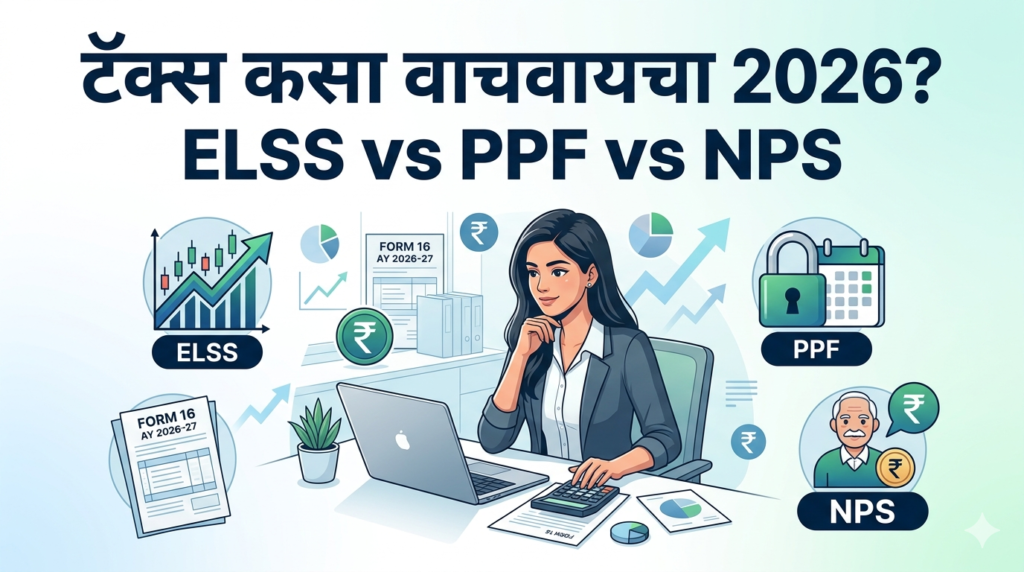
2026 मध्ये टॅक्स कसा बचवायचा? ELSS vs PPF vs NPS तुलना + कॅल्क्युलेटर
2026 मध्ये टॅक्स कसा बचवायचा: ELSS, PPF, NPS ची तुलना + कॅल्क्युलेटर
दर वर्षी मार्च महिन्यात टॅक्स बचतीचा गोंधळ होतो का? आता एकदा सगळं नीट समजून घ्या — ELSS, PPF, NPS मधील फरक, खरे फायदे आणि तुमच्यासाठी best option!
😫 दर वर्षी टॅक्स बचतीचा गोंधळ — का होतो?
फेब्रुवारी-मार्च आला की बहुतेक नोकरदार लोकांना एकच प्रश्न पडतो: “आता कुठे गुंतवणूक करू?” Chartered Accountant फोन उचलत नाही, बँकेत गेलं तर LIC policy विकतात, आणि YouTube वर बघितलं तर ELSS vs PPF vs NPS यांची इतकी घाण तुलना केलेली असते की डोक्यातच जात नाही!
2026 मध्ये परिस्थिती आणखी गुंतागुंतीची झाली आहे — कारण आता New Tax Regime default आहे. याचा अर्थ तुम्ही जर काही केलं नाही तर 80C चे फायदे मिळणारच नाहीत!
या लेखात आपण एकत्रच बघूया — ELSS, PPF, NPS मधला खरा फरक, 2026 मधले actual returns, आणि तुमच्या income नुसार किती टॅक्स वाचेल. शेवटी एक calculator पण आहे — वापरा!
📌 Section 80C म्हणजे काय?
Income Tax Act च्या Section 80C अंतर्गत ₹1,50,000 (दीड लाख) पर्यंतच्या गुंतवणुकीवर तुमच्या taxable income मधून वजावट मिळते. म्हणजे तुम्ही ₹1.5 लाख गुंतवले तर तितक्या उत्पन्नावर टॅक्स लागत नाही!
80C गुंतवणूक: ₹1,50,000
Taxable Income: ₹10,00,000 − ₹1,50,000 = ₹8,50,000
यामुळे राहुलला साधारण ₹31,200 ते ₹46,800 रुपये टॅक्स कमी द्यावा लागतो!
80C अंतर्गत eligible investments:
| Investment | Type | Risk | Returns (2026) |
|---|---|---|---|
| ELSS Mutual Funds | Market-linked | जास्त | 12–15% |
| PPF | Government Scheme | शून्य | 7.1% |
| NPS (Tier 1) | Pension Fund | मध्यम | 10–12% |
| NSC | Government Scheme | शून्य | 7.7% |
| Tax Saving FD | Bank Deposit | शून्य | 7.0–7.5% |
| Life Insurance Premium | Insurance | शून्य | 4–6% |
| Home Loan Principal | Loan Repayment | — | — |
| Sukanya Samriddhi | Government Scheme | शून्य | 8.2% |
⚡ ELSS vs PPF vs NPS — झटपट तुलना (2026)
तीनही options ला एका table मध्ये बघा आणि स्वतःसाठी decide करा:
| वैशिष्ट्य | 🔴 ELSS | 🟢 PPF | 🟣 NPS |
|---|---|---|---|
| Expected Returns (2026) | 12–15% (historical) | 7.1% (fixed) | 10–12% (equity heavy) |
| Lock-in Period | 3 वर्षे | 15 वर्षे | निवृत्तीपर्यंत (60) |
| Risk Level | जास्त | शून्य | मध्यम |
| Liquidity | मध्यम | कमी | खूप कमी |
| 80C Tax Benefit | ✅ हो | ✅ हो | ✅ हो |
| अतिरिक्त Tax Benefit | ❌ नाही | ❌ नाही | ✅ 80CCD(1B) ₹50,000 extra |
| Minimum Investment | ₹500/month | ₹500/year | ₹1,000/year |
| Tax on Returns | LTCG 10% (₹1L वर) | संपूर्ण tax-free | 60% tax-free on exit |
| Inflation Beating? | ✅ हो | ⚠️ barely | ✅ हो |
| कोणासाठी योग्य? | तरुण गुंतवणूकदार | Conservative | Retirement Planning |
📘 प्रत्येक Investment ची सविस्तर माहिती
ELSS (Equity Linked Savings Scheme)
PPF (Public Provident Fund)
NPS (National Pension System)
🔴 ELSS — फायदे, तोटे आणि कोणासाठी योग्य?
ELSS म्हणजे Equity Linked Savings Scheme. हे Mutual Funds आहेत जे मुख्यतः शेअर बाजारात गुंतवणूक करतात आणि Section 80C अंतर्गत tax benefit देतात.
- ✅ फायदे: सर्वात कमी lock-in (3 वर्षे), highest potential returns, SIP सुविधा, LTCG ₹1 लाखापर्यंत tax-free
- ❌ तोटे: market risk आहे, return guaranteed नाही, short-term loss शक्य
- 👤 कोणासाठी: 25–45 वयोगट, risk घेण्याची तयारी असलेले, wealth building करायचे असलेले
🟢 PPF — फायदे, तोटे आणि कोणासाठी योग्य?
PPF म्हणजे Public Provident Fund. भारत सरकारची EEE (Exempt-Exempt-Exempt) category ची scheme — गुंतवणूक, व्याज आणि withdrawal तीनही tax-free!
- ✅ फायदे: 100% safe, सरकारी गॅरंटी, EEE tax benefit, partial withdrawal (7 वर्षांनंतर), loan facility (3 वर्षांनंतर)
- ❌ तोटे: 15 वर्षे lock-in, inflation beating barely, returns fixed (government sets rate), maximum limit ₹1.5 लाख/year
- 👤 कोणासाठी: risk averse लोक, 40+ वयोगट, stable हमी हवी असलेले
🟣 NPS — फायदे, तोटे आणि कोणासाठी योग्य?
NPS म्हणजे National Pension System. निवृत्तीनंतर नियमित उत्पन्नासाठी डिझाइन केलेली सरकारी pension scheme. NPS चे सर्वात मोठे आकर्षण म्हणजे extra ₹50,000 tax deduction!
Section 80CCD(1B): अतिरिक्त ₹50,000 — हे ONLY NPS साठी!
म्हणजे जर तुम्ही ₹30% tax bracket मध्ये असाल तर NPS मुळे अतिरिक्त ₹15,600 टॅक्स वाचतो!
- ✅ फायदे: extra ₹50,000 deduction, market-linked growth, employer contribution possible, pension annuity, 60% lump sum tax-free on exit
- ❌ तोटे: retirement पर्यंत locked, 40% annuity mandatory (taxable), partial withdrawal नियम कठीण
- 👤 कोणासाठी: सरकारी कर्मचारी, retirement planning करणारे, high income (₹10L+) लोक
🧮 Tax Saving Calculator 2026
तुमची income टाका आणि बघा किती टॅक्स वाचेल!
📊 Income नुसार Tax Saving — Quick Reference
| Income | Tax (Deductions आधी) | Tax (80C नंतर) | Tax Saved | + NPS ₹50K ने |
|---|---|---|---|---|
| ₹5 लाख | ₹12,500 | ₹0 | ₹12,500 | ₹0 (already nil) |
| ₹8 लाख | ₹75,400 | ₹44,200 | ₹31,200 | +₹10,400 |
| ₹10 लाख | ₹1,12,500 | ₹65,500 | ₹46,800 | +₹15,600 |
| ₹15 लाख | ₹2,12,500 | ₹1,65,700 | ₹46,800 | +₹15,600 |
| ₹20 लाख | ₹3,37,500 | ₹2,90,700 | ₹46,800 | +₹15,600 |
* Standard Deduction ₹50,000 include. Cess (4%) included. Approximate values for illustration.
🎯 Best Tax Saving Strategy 2026
तुमच्या risk appetite नुसार strategy निवडा:
Safe आणि Steady
जोखीम नको, stability हवी
₹90K PPF + ₹60K NPS = ₹1.5L 80C
+₹50K NPS extra = ₹2L total
Best of All Worlds
Growth + Safety + Retirement
₹75K ELSS + ₹45K PPF + ₹30K NPS
+₹50K NPS extra = ₹2L total deduction
Maximum Growth
Risk आहे, returns जास्त
₹1.2L ELSS + ₹30K NPS
+₹50K NPS extra = ₹2L total deduction
🆚 Old vs New Tax Regime 2026 — कोणता बरा?
2026 मध्ये हा प्रश्न खूप महत्त्वाचा आहे. New Regime मध्ये tax rates कमी आहेत पण deductions नाहीत. Old Regime मध्ये rates जास्त पण 80C सारख्या अनेक सवलती आहेत.
📜 Old Tax Regime
- Section 80C, 80D, HRA available
- Standard Deduction ₹50,000
- Home Loan interest deduction
- NPS extra ₹50,000
- Higher tax slabs
- किफायतशीर जेव्हा: जास्त deductions असतील
🆕 New Tax Regime (2026)
- Lower tax rates
- Standard Deduction ₹75,000
- 80C नाही, 80D नाही
- Simpler filing
- ₹7 लाखांपर्यंत zero tax
- किफायतशीर जेव्हा: कमी deductions असतील
| Income | Old Regime Tax | New Regime Tax | कोणता चांगला? |
|---|---|---|---|
| ₹7 लाख | ~₹33,800 | ₹0 | New Regime |
| ₹10 लाख (with ₹2L deductions) | ~₹65,500 | ~₹54,600 | New Regime (barely) |
| ₹12 लाख (with ₹2L deductions) | ~₹1,00,700 | ~₹83,200 | Calculate करा |
| ₹15 लाख (with ₹3L deductions) | ~₹1,42,500 | ~₹1,45,600 | Old Regime |
| ₹20 लाख+ (with ₹3L+ deductions) | significantly less | higher | Old Regime |
⚠️ Common Mistakes — या चुका टाळा!
-
फक्त Tax बचतीसाठी गुंतवणूक
खरी investment philosophy म्हणजे पहिले wealth building, मग tax saving हा bonus. LIC Traditional Plans मध्ये फक्त tax साठी गुंतवणूक केल्याने returns 4-5% च मिळतात — inflation ला भेटत नाही! -
Lock-in Period न समजणे
PPF 15 वर्षे, NPS retirement पर्यंत — हे emergency fund म्हणून वापरता येत नाही. आधी 6 महिन्यांचा emergency fund बनवा, मग tax saving investments करा. -
LIC वर Over-Dependence
LIC Traditional Endowment Plans मधून फक्त 4-6% return येतो. Term Insurance + ELSS combination नेहमीच better असते. Insurance आणि Investment वेगळे ठेवा. -
मार्च मध्ये Panic Investment
वर्षाच्या शेवटी एकदम ₹1.5 लाख गुंतवण्यापेक्षा दर महिना SIP करणे हुशारी. Market Timing चा trap टाळतो आणि cash flow smooth राहतो. -
Regime Switch न केल्याने नुकसान
New Regime default आहे म्हणून बरेच लोक 80C चा फायदाच घेत नाहीत! Employer ला Form 12BB द्या किंवा ITR filing वेळी Old Regime select करा.
❓ वारंवार विचारले जाणारे प्रश्न (FAQs)
✅ Conclusion — आता कोणता पर्याय निवडाल?
एक line मध्ये सांगायचं तर: ELSS for growth, PPF for safety, NPS for retirement + extra tax benefit.
| तुम्ही कोण आहात? | Best Option |
|---|---|
| 25-35 वयोगट, risk घेण्याची तयारी | ELSS SIP |
| 40+ वयोगट, stability हवी | PPF + NPS mix |
| High Income (₹15L+), tax बचत जास्त हवी | ELSS + NPS (80CCD 1B) |
| Government Employee, pension plan | NPS maximize |
| Salaried, balanced approach | ELSS 50% + PPF 30% + NPS 20% |
सर्वात महत्त्वाचं — उशीर करू नका! Tax saving investment म्हणजे केवळ tax वाचवणे नाही, तर wealth बनवणे आहे. आजपासून सुरुवात करा, SIP लावा, आणि March मध्ये होणारा panic टाळा.
या लेखात काही प्रश्न असतील तर comment करा — PaisaChiKala Team नक्की उत्तर देईल! 😊

Prasad Govenkar is an accomplished enterprise architect with over 24 years of experience in the technology industry, specializing in telecom BSS solutions and large-scale digital transformation programs. Throughout his career, he has worked on complex systems, helping organizations design, build, and optimize technology platforms that drive business efficiency and growth.
Beyond his professional expertise, Prasad has a deep passion for personal finance, investing, and wealth creation. He is dedicated to simplifying financial concepts and making them accessible to everyday investors, especially in the Indian context.
Prasad is the voice behind finance-focused blogs such as InvestIndia.blog and PaisaChiKala.com, where he shares practical insights on:
Mutual funds and SIP investing
Tax planning and capital gains strategies
Long-term wealth creation
Financial discipline and money management
Stock market fundamentals
His approach blends analytical thinking with real-world experience, enabling readers to make informed and confident financial decisions.
Prasad strongly believes that financial literacy is the key to long-term prosperity and that consistent, disciplined investing can help anyone achieve financial independence—regardless of their starting point.
व्हॉट्सॲपवर माहिती हवी आहे?
आमचे मोफत व्हॉट्सॲप चॅनेल सबस्क्राईब करा आणि महत्वाचे लेख थेट मोबाईलवर मिळवा.